WORKSHEETS
Student explore survey data presentation methods.
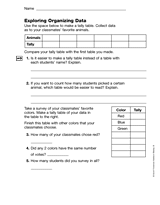
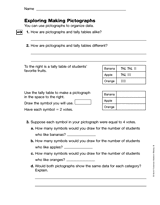
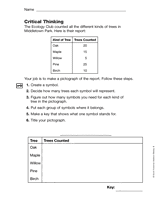
Students compare pictograph and tally survey presentation methods.
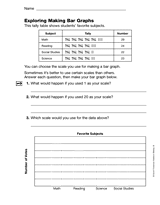
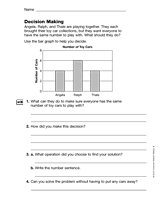
Students practice presenting data inside of a bar graph.
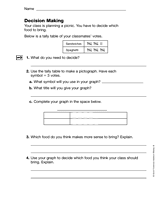
Students use pictographs and tally charts to plan a class picnic.
Distribute this packet of worksheets to give students practice in using graphs to answer word problems.
Students use the given data and graphs to answer word problems in this printable packet.
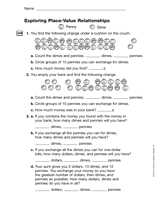
Using coin exchange, students gain an understanding of place-value relationships.
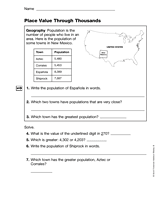
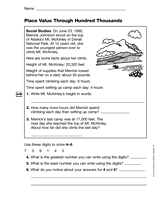
Students gain an understanding of larger numbers through population values.
Students use mountain climbing as a means to understand larger numbers.
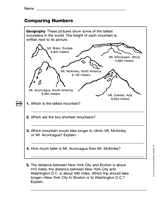
Students use mountain heights in order to compare numbers and explain reasoning.
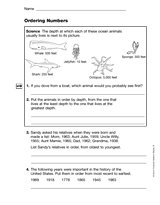
Students place numbers in order, using both years and ocean depths.
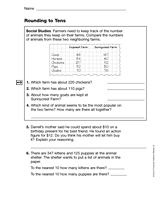
Students use farm and animal data to practice approximating.
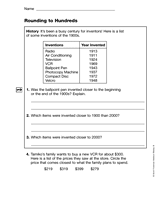
Students practice rounding by looking at inventors and money.
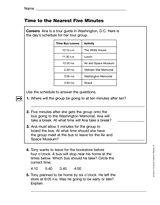
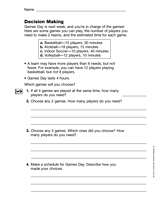
Students practice interpreting a schedule and following time limits.
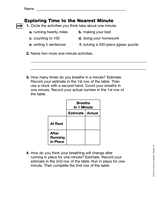
Students explore the concept of one minute by determining how long it take to do selected activities.
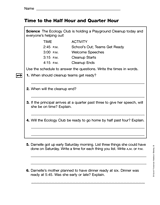
Students use a schedule to answer questions. Concepts such half past and quarter to are utilized.
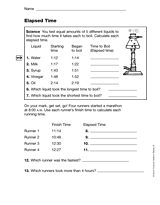
Students use arithmetic to figure elapsed times through examples of a race and boiling liquid.
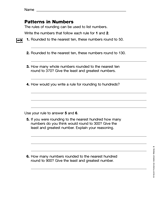
Students use the rules of rounding to determine patterns.
Distribute this packet of worksheets to give students practice in working with time.
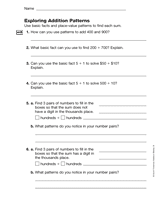
Students use addition patterns in order to break large mathematics problems into more manageable pieces.
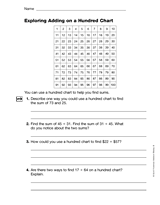
Students learn to use a provided number chart to help them solve addition and subtraction problems.
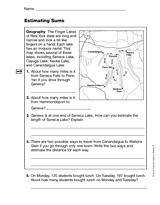
Students practice estimating distance by utilizing a provided map.
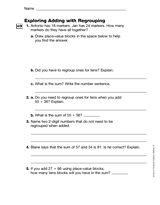
Students practice adding two-digit numbers by regrouping.
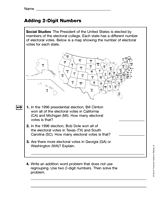
Students solve a word problem involving the electoral college and the addition of two-digit numbers.